Design
Learn more about upcoming DiRT & Glitter Youth Art & Adventure Program design offerings below!
Sign up for the DiRT & Glitter newsletter at the bottom of the page to learn more about design courses in the months to come!
Salvaging Abundance Together
A 4-Part Community Permaculture Workshop Series
with Ben Zumeta of Old Growth Edible Landscapes & the Wild Rivers Permaculture Guild
This FREE workshop series will help students identify and use abundant–often free–materials to grow food, harvest water and protect our homes from fire and flood, all while helping biodiversity flourish.
Come learn with Ben Zumeta of Old Growth Edible Landscapes, site designer-developer for the Crescent City Food Forest, naturalist, educator, park ranger, ecological restorationist, homesteader & permaculture designer with over a decade experience
Series includes:
Workshop #1: An Introduction to Permaculture: Planting seeds of restoration, resilience & community
April 4, 12-2pm
Workshop #2: Salvaging Abundance: Turning potential pollutants into fertility & filtration
April 16, 12-2pm
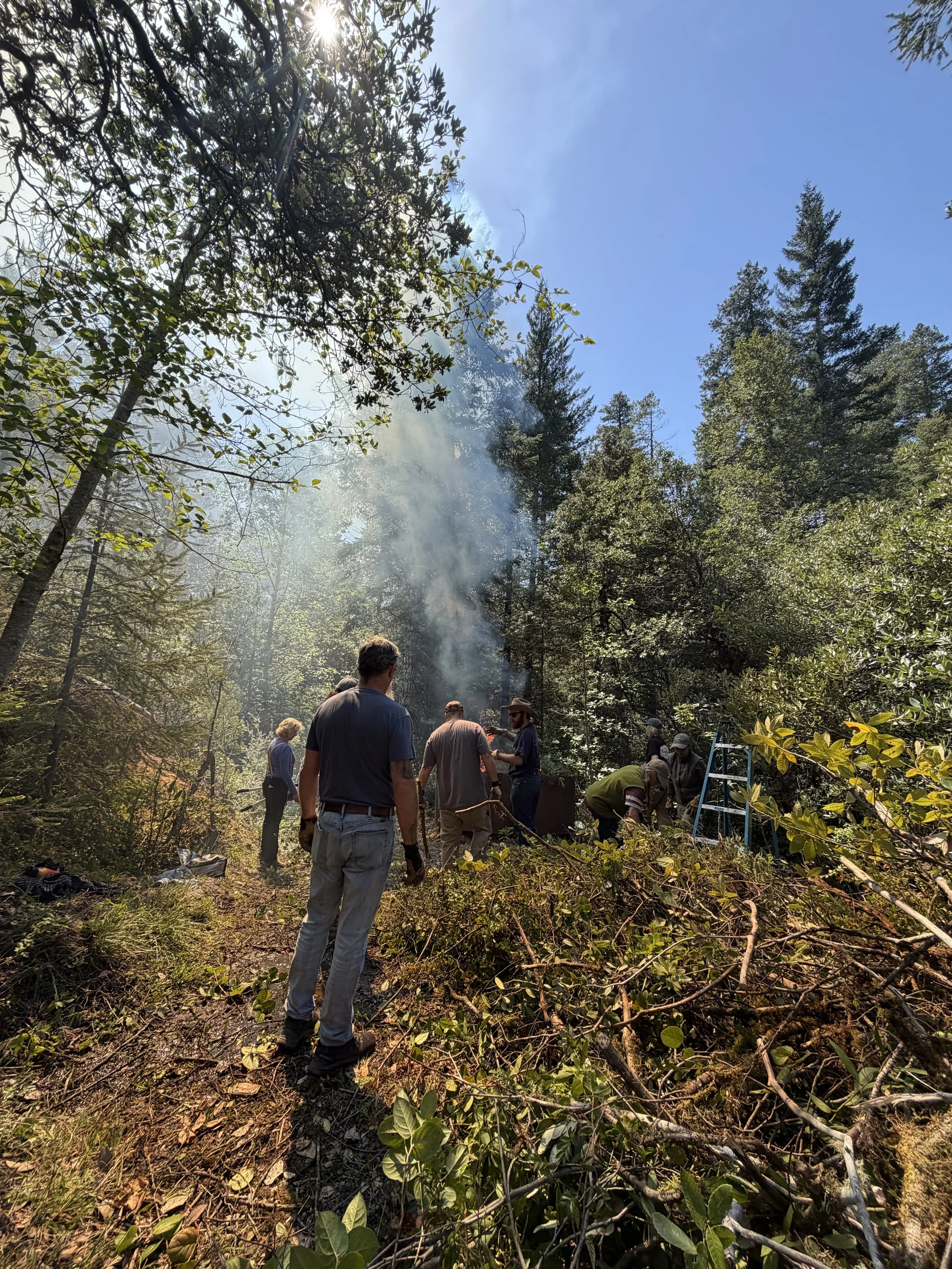
Workshop #3: Fire on the Mountain: Shaded fuel breaks for fire protection & biochar production
Date & Time TBD (please sign up via registration form to be the first to know when details are confirmed!)
Workshop #4: Be the Beaver You Wish to See in the World: Water cycle restoration with woody debris, inspired by beavers

Date & time TBD (please sign up via registration form to be the first to know when details are confirmed!)
Preregistration highly encouraged, which you can do here.If you are interested in workshops #3 and/or 4, please use this form to indicate your interest so that we can let you know when details are confirmed.
See below for more details and to sign up for one or more of the workshops!
FREE for those living in Del Norte & adjacent tribal lands!
Questions? Contact ogediblelandscapes@gmail.com or 707-954-9207
Salvaging Abundance Together
Workshop Details
To learn more about what each workshop entails, click on the workshop title for more details
Locations:
Workshops 1&2 will take place at Taa-'at-dvn Chee-ne' Tetlh-tvm' — Crescent City Food Forest at the College of the Redwoods' Del Norte Campus
Workshops 3 & 4 tentatively scheduled to take place at Ben's property on Low Divide Rd.
-
Planting seeds of restoration, resilience & community
April 4, 12-2pm
This introductory workshop explores how ethics-based permaculture design can enrich our lives as we care for the Earth and people. We will learn to plant seeds, make raised beds and build healthy soil in them, even if free and salvaged materials are all we have at hand. These activities will be the basis for discussion of other practical steps we can take in this revolution disguised as organic gardening. All skill and knowledge levels are welcome. Already an expert? Come help teach a beginner!
What to Bring:
Closed-toed shoes comfortable for walking uneven ground. (Rain boots are best in Spring)
Weather appropriate clothing (rain jackets are always a good idea).
Gloves and safety glasses (we will have some to share but bringing your own would help)
Seeds you would like to share or get advice on planting.
Salvaged or up-cycled seed starting containers to bring starts home
Gardening tools (optional, label so they go home with you)
An open mind, positivity, and your ideas.
-
Turning potential pollutants into fertility & filtration
April 16, 12-2pm
Many natural resources can become pollutants when over abundant and underutilized. Wood and underbrush in regrowing forests are a classic example. We can help forest and watershed health while turning potential smoke into soil by thinning the overpacked understory and using it in our gardens. This workshop will cover how to do so, including:
identifying the source species of woody debris and woodchips, and best uses of each
hugelkulture, a woody debris based raised bed that holds water while also improving soil drainage and fertility
woodchip mulching best practices
other uses of woody debris, including animal bedding, biochar, water absorbing and filtering drainage structures, and other watershed restoration uses
Woody debris is just one example of this principle, and we will discuss other abundant materials we can salvage to turn potential pollutants into improved human habitat.
What to Bring:
Closed-toed shoes comfortable for walking uneven ground. (Rain boots are best in Spring)
Weather appropriate clothing (rain jackets are always a good idea).
Gloves and safety glasses (we will have some to share but bringing your own would help)
Gardening tools (optional, label so they go home with you)
Observations of salvageable materials and ideas for how to use them
An open mind, positivity, and your ideas.
-
Shaded fuel breaks for fire protection & biochar production
Date & Time TBDIn collaboration with the Del Norte Fire Safe Council crew, we will be working on a shaded fuel break that protects surrounding homes and forms a strategically important firebreak for everything downwind of the Myrtle Creek watershed (Jed Smith, Hiouchi, Crescent City). Participants will learn how to:
Make a shaded fuel break that protects structures and the largest, healthiest trees
Connect with the Fire Safe Council crew for help or advice doing so at home
Use woody debris for making biochar, a soil amendment used by native people of the Americas for millennia. Biochar increases soil fertility, water retention and filtration for centuries. It is also useful for livestock, reducing feeding requirements and bedding odors.
Participants will get inoculated biochar to bring home for their garden, compost, or livestock.
What to Bring:
Closed-toed shoes comfortable for walking uneven ground.
Weather appropriate clothing (rain jackets are always a good idea). If you'd like to be involved with burning, cotton or wool clothing, leather gloves and boots are best. Plastic based clothes melt surprisingly easily!
Gloves and safety glasses (we will have some to share but bringing your own would help)
A bucket or bin for bringing biochar home with you
A truckload of woody debris if you'd like us to make biochar with it for you (no treated or painted wood, nor plywood)
An open mind, positivity, and your ideas.
We will provide things to cook over the biochar kiln for lunch, and snacks. Please pack a lunch if you have any special dietary requirements.
LET US KNOW YOU ARE INTERESTED IN KNOWING WHEN WORKSHOP 3 IS HERE!
-
Water cycle restoration with woody debris, inspired by beavers
Date & time TBDOur continent has been short at least 40 million of beavers since the 1800's. Each pair of these industrious ecosystem engineering rodents hydrated a couple acres of wetlands and forests with their work, stabilizing the water cycle of North America. Now, with only 1/10th of their historic population, we must do the beaver's work. In doing so we encourage their return to finish the job on our partially restored, rehydrated watersheds. Our region may be the most important to restore in all of North America, as our forested coastal mountains prime the hydrological pump. We will cover how to use the larger woody debris from fire mitigating shaded fuel breaks to build beaver dam analogues and other water retention and infiltration structures. Doing so can rehydrate forests, mountainsides and aquifers–feeding springs, creeks and rivers through dry summers.
What to Bring:
Closed-toed shoes comfortable for walking uneven ground. Rain boots help working around water.
Weather appropriate clothing (rain jackets are always a good idea). Long sleeves and pants are a good idea.
Gloves and safety glasses (we will have some to share but bringing your own would help)
An open mind, positivity, and your ideas
Lunch (we will provide water and snacks).
LET US KNOW YOU ARE INTERESTED IN KNOWING WHEN WORKSHOP 4 IS HERE!